


BIONUTREX™ is a physician-founded nutrition company dedicated to developing premium, science-informed dietary supplements that support health and wellness through evidence-informed nutritional formulation.
Our mission is to combine scientific research, clinical insight, and high manufacturing standards to create innovative nutritional products that support healthy physiological function and improve quality of life.

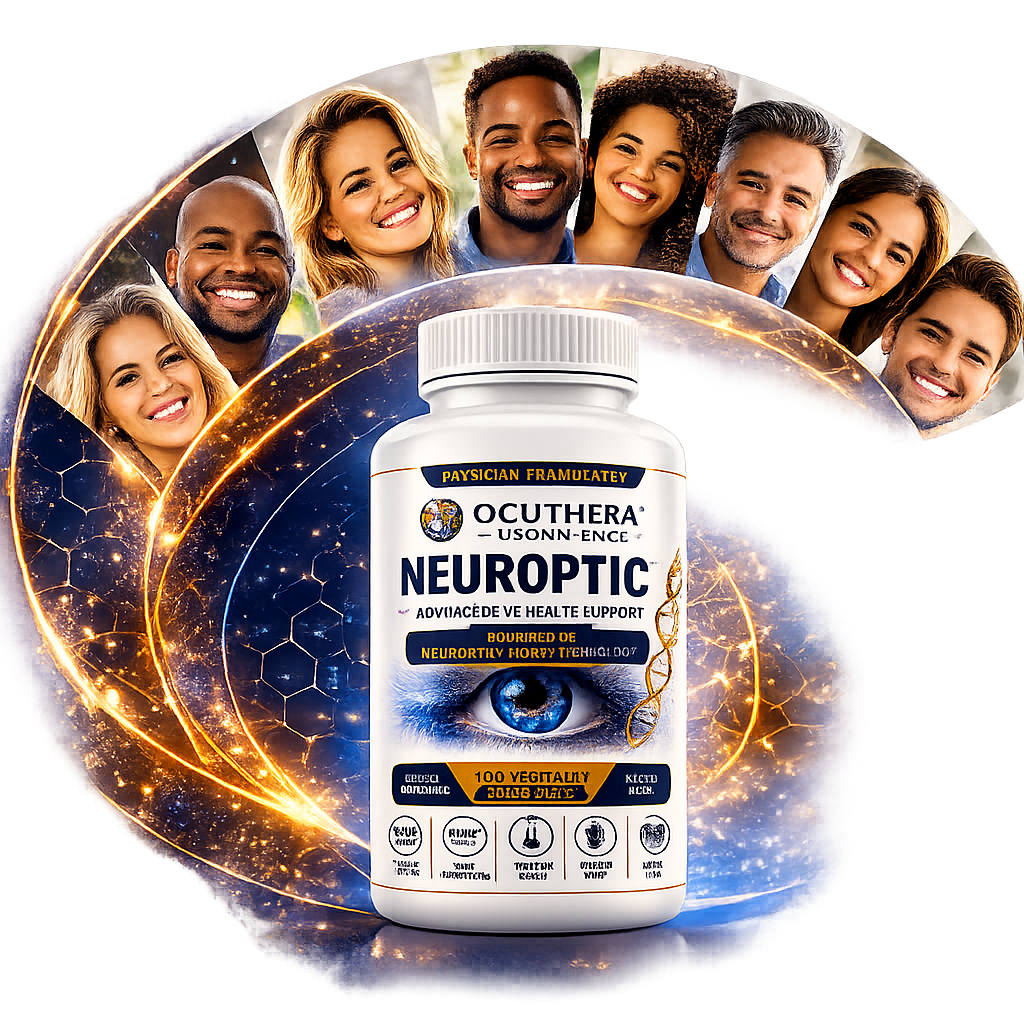
Featured Product: OcuThera™ NEUROPTIC™
Advanced Eye Health Support
NEUROPTIC™ is BIONUTREX™’s flagship physician-developed dietary supplement powered by Neuroptic™ Matrix Technology. It combines carefully selected ingredients into a comprehensive nutritional formulation designed to support healthy visual function, healthy cellular energy metabolism, healthy microcirculation, antioxidant defense, and overall eye wellness.
Powered by Neuroptic™ Matrix Technology
Neuroptic™ Matrix Technology is BIONUTREX™’s proprietary formulation philosophy that integrates clinically selected nutrients into complementary nutritional systems designed to support healthy visual function and cellular wellness.
Key Ingredients
- Citicoline (as Citicoline Sodium)
- Beta-Nicotinamide Mononucleotide (NMN)
- Ginkgo biloba Extract
- Magnesium Complex (Glycinate, L-Threonate, Citrate)
- Coenzyme Q10
- Alpha-Lipoic Acid
- Vitamin B1 (Thiamine)
- Vitamin B6 (Pyridoxal-5-Phosphate)
- Vitamin B12 (Methylcobalamin)
NEUROPTIC™ Product Features
Clinically Designed. Scientifically Engineered.
NEUROPTIC™ is a physician-developed nutritional formulation powered by Neuroptic™ Matrix Technology, combining clinically selected ingredients to support healthy visual function, cellular energy metabolism, healthy circulation, antioxidant defense, and overall eye wellness.
Neuroptic™ Matrix Technology is the nutritional formulation platform behind NEUROPTIC™, bringing together carefully selected nutrients to provide complementary nutritional support across multiple aspects of cellular and visual wellness.
Suggested Use
Adults take four (4) capsules daily with a meal or as recommended by a qualified healthcare professional.
Neuroptic™
Advanced Nutritional Support for the Optic Nerve & Visual Pathway
Science-Informed. Vision-Focused. Designed for Long-Term Neural Support.
The eye does more than capture an image. Vision depends on a highly specialized neural network extending from the retina and retinal ganglion cells to the optic nerve and visual centers of the brain.
Neuroptic™ was developed around this broader understanding of visual health.
Among the scientifically investigated nutrients incorporated into the Neuroptic approach is citicoline, also known as CDP-choline—a naturally occurring biological compound involved in neuronal membrane metabolism and phospholipid synthesis.
Citicoline has attracted significant scientific interest because laboratory and human studies have investigated its effects on retinal ganglion-cell function, visual neural signaling, neuronal membrane integrity and the optic nerve–brain visual pathway.
The research is promising, although it remains important to distinguish supportive nutritional science from established medical treatment.
Supporting the Neural Side of Vision
Retinal ganglion cells are specialized neurons that receive information from the retina and transmit it through the optic nerve toward the brain.
Like other neurons, they depend on:
- healthy cellular membranes;
- efficient mitochondrial energy production;
- normal neurotransmission;
- controlled oxidative stress;
- appropriate neuronal signaling; and
- resistance to metabolic stress.
Citicoline participates in the biosynthesis of phosphatidylcholine, an important structural component of neuronal cell membranes. Reviews of the ophthalmic literature have also described experimental effects involving retinal dopamine, anti-apoptotic pathways and preservation of retinal neuronal function. (PubMed)
This biological profile has led researchers to examine citicoline across a range of neuro-ophthalmic conditions.
Many traditional vision supplements are designed primarily around antioxidant or macular nutritional support.
Citicoline represents a different scientific concept.
Its research focuses substantially on neuronal metabolism and neural function.
Experimental and clinical literature has investigated citicoline in relation to:
Retinal ganglion-cell function
Clinical electrophysiology studies have reported changes in pattern electroretinography, or PERG, following citicoline administration. PERG is an objective method used in research to assess inner-retinal and retinal ganglion-cell function. (PubMed)
Visual pathway signaling
Researchers have also reported changes in visual evoked potential, or VEP, measurements—an electrophysiological assessment of neural transmission between the eye and visual cortex. (PubMed)
Visual pathway signaling
Researchers have also reported changes in visual evoked potential, or VEP, measurements—an electrophysiological assessment of neural transmission between the eye and visual cortex. (PubMed)
Neuronal membrane support
Citicoline contributes biologically to the synthesis of membrane phospholipids, especially phosphatidylcholine, providing a mechanistic rationale for its investigation in neuronal health. (PubMed)
Neural responses to metabolic and oxidative stress
Experimental models have demonstrated effects on neuronal survival and visual-system integrity under conditions of neural stress. (PubMed)
Retina-to-brain visual-system integrity
Modern research increasingly recognizes that visual health involves not only the retina and optic nerve but the entire neural pathway connecting the eye to the brain.
In an experimental glaucoma model, van der Merwe and colleagues reported that oral citicoline reduced deterioration in measures of visual-system integrity and visual function without lowering intraocular pressure, supporting investigation of mechanisms independent of pressure reduction. (PubMed)
One of the most frequently cited clinical investigations was published by Parisi and colleagues in Ophthalmology in 1999.
The investigators evaluated retinal and visual-pathway electrical responses in people with glaucoma.
Citicoline administration was associated with improvement in both:
⦁ PERG measurements, reflecting retinal neural function; and
⦁ VEP measurements, reflecting visual-pathway neural conduction.
The investigators concluded that citicoline appeared capable of improving retinal and visual-pathway function in the study population. (PubMed)
These findings subsequently stimulated longer-term studies.
Citicoline and Retinal Ganglion-Cell Function
One of the most frequently cited clinical investigations was published by Parisi and colleagues in Ophthalmology in 1999.
The investigators evaluated retinal and visual-pathway electrical responses in people with glaucoma.
Citicoline administration was associated with improvement in both:
⦁ PERG measurements, reflecting retinal neural function; and
⦁ VEP measurements, reflecting visual-pathway neural conduction.
The investigators concluded that citicoline appeared capable of improving retinal and visual-pathway function in the study population. (PubMed)
These findings subsequently stimulated longer-term studies.
Long-Term Electrophysiologic Research
In an eight-year follow-up investigation, Parisi reported that repeated periods of citicoline administration were associated with improvement in retinal and cortical bioelectrical responses measured by PERG and VEP.
The study proposed that citicoline might have a role as a complement to conventional pressure-lowering therapy in research involving glaucoma. (PubMed)
A later scientific review by Parisi and colleagues discussed these findings as suggestive of potential neuroprotective activity while recognizing the need for continued research. (PubMed)
These studies are particularly interesting because the observed physiological changes appear to involve neural function rather than intraocular-pressure reduction.
Citicoline Eye-Drop Research
Researchers have also investigated citicoline delivered topically.
A preliminary study by Roberti and colleagues evaluated citicoline-containing eye drops in people with glaucomatous optic neuropathy. Changes in electrophysiologic measures of retinal function were observed during treatment. (PubMed)
In 2015, Parisi and colleagues reported that topical citicoline treatment in open-angle glaucoma enhanced retinal bioelectrical responses and was associated with improved electrophysiological activity along the visual pathway. (PubMed)
The importance of these studies for nutritional science is not that topical and oral products are interchangeable—they are not—but that multiple routes of citicoline exposure have generated research signals involving retinal and visual neural function.
Three-Year Randomized Clinical Research
An especially important study was published by Rossetti and colleagues in the Journal of Glaucoma in 2020.
This randomized, placebo-controlled clinical trial examined citicoline eye drops as an adjunct in people whose glaucoma continued to worsen despite controlled intraocular pressure.
The investigators evaluated:
⦁ standard 24-2 visual fields;
⦁ central 10-2 visual fields; and
⦁ retinal nerve-fiber-layer OCT measurements.
The difference in the principal 24-2 visual-field progression endpoint did not reach statistical significance.
However, secondary analyses involving 10-2 visual-field progression and RNFL OCT progression favored the citicoline-treated group. The authors concluded that adjunctive citicoline eye drops might reduce progression in this selected population. (PubMed)
This study is scientifically encouraging, but it should not be interpreted to mean that oral citicoline—or Neuroptic™—has been proven to prevent or treat glaucoma.
Oral Citicoline Research
Oral citicoline has also been investigated.
Ottobelli and colleagues evaluated oral citicoline solution in patients showing relatively rapid visual-field deterioration.
The study reported a reduction in the apparent rate of glaucomatous visual-field progression after supplementation and suggested that citicoline deserved further investigation as an adjunctive strategy. (PubMed)
A separate study evaluating oral citicoline and OCT measurements reported short-term preservation of average retinal nerve-fiber-layer measurements compared with controls. (PubMed)
These findings remain preliminary and do not establish that oral citicoline prevents glaucoma progression.
Research Beyond Glaucoma
Non-Arteritic Anterior Ischemic Optic Neuropathy
Citicoline has also been investigated in another condition involving retinal ganglion cells and the optic nerve: non-arteritic anterior ischemic optic neuropathy, or NAION.
In a randomized pilot study, Parisi and colleagues evaluated 500 mg/day oral citicoline for six months, followed by washout.
The treated group demonstrated favorable changes in several functional and structural measures, including visual acuity, electrophysiology and visual-field parameters compared with the untreated group. (PubMed)
Because this was a relatively small pilot study, the results should be regarded as encouraging rather than definitive.
Experimental Evidence: Looking Beyond the Eye
A sophisticated experimental study published in Neurotherapeutics examined citicoline in a model of chronic elevated intraocular pressure.
Investigators evaluated the visual system using:
⦁ MRI;
⦁ measures of axonal transport;
⦁ visual behavior;
⦁ optic-nerve histology;
⦁ visual-brain connectivity; and
⦁ neuronal structural markers.
Citicoline reduced deterioration in several measures of visual-system integrity and visual performance without significantly altering intraocular pressure. (PubMed)
This research supports an important scientific principle behind Neuroptic™:
Vision is a neural process extending from the retina to the brain.
Supporting visual health therefore involves consideration of the retina–optic nerve–brain axis, not simply the optical structures of the eye.
What Does the Total Evidence Actually Show?
Citicoline has one of the more extensive research histories among nutritional compounds investigated for retinal ganglion-cell and visual-pathway function.
But scientific credibility requires presenting both positive and negative evidence.
A 2023 systematic review by Prinz and colleagues analyzed 10 clinical studies involving 424 patients with glaucoma.
When results were pooled, there was insufficient evidence to establish a statistically significant overall benefit of citicoline for major conventional endpoints including:
⦁ intraocular pressure;
⦁ 24-2 visual-field mean deviation;
⦁ retinal nerve-fiber-layer thickness; and
⦁ PERG amplitude.
The authors concluded that there was insufficient evidence to establish that citicoline slows glaucoma progression. (PLOS)
This is an important limitation—and one that Neuroptic™ believes should be communicated openly.
Neuroprotection vs. Neuroenhancement
Understanding the difference is critical.
Neuroenhancement
Neuroenhancement means improving the function of neural tissue that is still alive but may be operating inefficiently.
Repeated improvements in PERG and VEP reported in several citicoline studies are consistent with enhanced neural function or signaling. (PubMed)
Neuroprotection
True neuroprotection would mean demonstrating that a compound prevents or materially slows irreversible neuronal or axonal loss over time.
Although animal studies and selected clinical investigations provide promising signals, long-term structural neuroprotection has not yet been conclusively established in humans. The 2023 systematic review reinforces this distinction. (PubMed)
For this reason, Neuroptic™ does not characterize citicoline as a cure or treatment for glaucoma or optic neuropathy.
Why Citicoline Fits the Neuroptic™ Philosophy
Neuroptic™ is built around a broader vision-science concept:
Support the biological systems that healthy retinal and neural tissues require.
Citicoline contributes a distinctive nutritional role because its scientific literature relates to:
Neuronal membrane metabolism
Citicoline participates in phosphatidylcholine biosynthesis.
Retinal neural signaling
Clinical studies have repeatedly evaluated PERG responses following citicoline exposure.
Retina-to-brain communication
VEP studies have investigated neural conduction through the visual pathway.
Cellular resilience
Laboratory studies provide evidence supporting investigation of citicoline under conditions of metabolic and neuronal stress.
The optic nerve–brain connection
Contemporary research increasingly considers glaucoma and related optic neuropathies within the broader framework of neurodegeneration involving the entire visual system.
This makes citicoline scientifically complementary to a comprehensive nutritional strategy designed to support normal cellular metabolism, antioxidant defense and neural visual function.
The Neuroptic™ Scientific Standard
We believe confidence should come from transparent science—not exaggerated promises.
For that reason, Bionutrex distinguishes among three levels of evidence:
Established Biology
Citicoline is a naturally occurring intermediate involved in phosphatidylcholine synthesis and neuronal membrane metabolism. (PubMed)
Promising Clinical Evidence
Multiple human studies have reported changes in retinal electrophysiology, visual-pathway electrophysiology and selected structural or functional outcomes following citicoline administration. (PubMed)
Questions Still Being Studied
It has not been definitively established that citicoline prevents retinal ganglion-cell death, reliably slows glaucoma progression or prevents blindness in humans. (PLOS)
That distinction matters.
It allows Neuroptic™ to remain grounded in the emerging science of nutritional neural support without presenting a dietary supplement as a medical treatment.
Frequently Asked Questions
Is citicoline a glaucoma medication?
No.
Citicoline is not a substitute for prescription glaucoma therapy or intraocular-pressure management.
Glaucoma requires evaluation and ongoing care by an appropriately qualified eye-care professional.
Has citicoline been studied in glaucoma?
Yes.
Citicoline has been evaluated in experimental research and multiple human studies using oral, intramuscular and topical formulations. Outcomes investigated have included PERG, VEP, visual fields and OCT measurements. (PubMed)
Does the research prove that citicoline prevents glaucoma progression?
No.
Some individual studies have produced encouraging findings, but a systematic review concluded that the total available clinical evidence remains insufficient to establish that citicoline slows glaucoma progression. (PLOS)
Why include citicoline in a vision-support formulation?
Citicoline has biological roles in neuronal phospholipid metabolism and has been extensively investigated for retinal ganglion-cell and visual neural function.
Its scientific profile therefore fits a nutritional strategy focused on supporting normal neural and visual-system physiology.
Can Neuroptic™ replace glaucoma medications?
No.
Neuroptic™ is a dietary supplement and should never replace prescription medications, laser therapy, surgery, routine eye examinations or other treatment prescribed by an ophthalmologist or other qualified eye-care professional.
Selected Peer-Reviewed Scientific Literature
Clinical Glaucoma Studies
1. Parisi V, Manni G, Colacino G, Bucci MG. Cytidine-5′-diphosphocholine (citicoline) improves retinal and cortical responses in patients with glaucoma. Ophthalmology. 1999;106:1126–1134. PMID: 10366081. (PubMed)
2. Parisi V. Electrophysiological assessment of glaucomatous visual dysfunction during treatment with cytidine-5′-diphosphocholine (citicoline): a study of 8 years of follow-up. Documenta Ophthalmologica. 2005;110:91–102. PMID: 16249960. (PubMed)
3. Parisi V, Coppola G, Centofanti M, et al. Evidence of the neuroprotective role of citicoline in glaucoma patients. Progress in Brain Research. 2008;173:541–554. PMID: 18929133. (PubMed)
4. Ottobelli L, Manni GL, Centofanti M, et al. Citicoline oral solution in glaucoma: is there a role in slowing disease progression? Ophthalmologica. 2013;229(4):219–226. PMID: 23615390. (PubMed)
5. Roberti G, Tanga L, Parisi V, et al. A preliminary study of the neuroprotective role of citicoline eye drops in glaucomatous optic neuropathy. Indian Journal of Ophthalmology. 2014;62(5):549–553. PMID: 24881599. (PubMed)
6. Parisi V, Centofanti M, Ziccardi L, et al. Treatment with citicoline eye drops enhances retinal function and neural conduction along the visual pathways in open-angle glaucoma. Graefe’s Archive for Clinical and Experimental Ophthalmology. 2015;253(8):1327–1340. PMID: 26004075. (PubMed)
7. Rossetti L, Iester M, Tranchina L, et al. Can treatment with citicoline eyedrops reduce progression in glaucoma? The results of a randomized placebo-controlled clinical trial. Journal of Glaucoma. 2020;29(7):513–520. PMID: 32541370. (PubMed)
8. Sahin AK, et al. Effect of oral citicoline therapy on retinal nerve fiber layer and ganglion cell complex in patients with primary open-angle glaucoma. 2022. PMID: 35310047. (PubMed)
9. Rossetti L, et al. The effect of citicoline oral solution on quality of life in patients with glaucoma: an international randomized, placebo-controlled crossover study. Graefe’s Archive for Clinical and Experimental Ophthalmology. 2023;261. PMID: 36639525. (PubMed)
Experimental and Mechanistic Research
1. van der Merwe Y, Murphy MC, Sims JR, et al. Citicoline modulates glaucomatous neurodegeneration through intraocular pressure-independent control. Neurotherapeutics. 2021;18(2):1339–1359. doi:10.1007/s13311-021-01033-6. PMID: 33846961. (PubMed)
2. Parisi V, et al. Citicoline and retinal ganglion cells: effects on morphology and function. Current Neuropharmacology. 2018;16(7):919–932. doi:10.2174/1570159X15666170703111729. PMID: 28676014. (PubMed)
3. Roberti G, Tanga L, Michelessi M, et al. Cytidine 5′-diphosphocholine (citicoline) in glaucoma: rationale of its use, current evidence and future perspectives. International Journal of Molecular Sciences / related ophthalmic review literature. The review describes citicoline’s roles in membrane phospholipid metabolism and summarizes its ophthalmic neurobiological evidence. PMID: 26633368. (PubMed)
Other Optic-Neuropathy Research
1. Parisi V, Barbano L, Di Renzo A, Coppola G, Ziccardi L. Neuroenhancement and neuroprotection by oral solution citicoline in non-arteritic ischemic optic neuropathy: a randomized pilot study. PLoS One. 2019;14:e0220435. PMID: 31348806. (PubMed)
Systematic Review
1. Prinz J, Prokosch V, Liu H, Walter P, Fuest M, Migliorini F. Efficacy of citicoline as a supplement in glaucoma patients: a systematic review. PLoS One. 2023;18(9):e0291836. PMID: 37768938. (PLOS)
The review included 10 clinical studies and 424 participants and concluded that current evidence remains insufficient to establish that citicoline slows glaucoma progression
Important Medical Information
Neuroptic™ is intended to provide nutritional support and is not a substitute for comprehensive ophthalmic examination, diagnosis or medical treatment.
Individuals with glaucoma, ocular hypertension, optic neuropathy, sudden loss of vision, visual-field abnormalities or other eye disease should remain under the care of an ophthalmologist or other appropriately qualified eye-care professional.
Do not discontinue prescribed glaucoma medications or other medical treatment without consulting your treating physician.
Frequently Asked Questions
NEUROPTIC™ is a dietary supplement and is not a prescription medication. Consult your healthcare professional before use if pregnant, nursing, taking medications, or managing a medical condition.
FDA Disclaimer
These statements have not been evaluated by the Food and Drug Administration. This product is not intended to diagnose, treat, cure, or prevent any disease.
Contact Us
BIONUTREX™
1039 E. Brandon Blvd.
Brandon, FL 33511 USA
Phone:
+1(813) 966-4763;
+1(813) 330-6613
Email:
info@bionutrex.net
Website:
www.bionutrex.net
Manufacturer Information:
Manufactured for: BIONUTREX™
1039 E. Brandon Blvd.
Brandon, FL 33511 USA
Brand Hierarchy:
BIONUTREX™
OcuThera™ Vision Sciences
NEUROPTIC™
Powered by Neuroptic™ Matrix Technology